The Ultimate Wedding Ceremony Order
Your wedding ceremony is the biggest and most important moment of your entire wedding day. It’s the culmination of months or even years of planning, and you’ll be running on excitement and adrenaline as you tie the knot with the love of your life, as your family and friends gather to watch.
But what exactly happens at a wedding ceremony? Are they all the same? How do you know what to say and when, and how can you make sure it goes ahead perfectly?
Thankfully, throughout the ceremony, there are professionals to guide you through the process. That doesn’t mean you can’t find out how your ceremony might go down even before you’ve secured a date. So, in this post, we’re going to take a deep dive into different wedding ceremony orders, including those from various cultures, beliefs and religions commonly found across South Africa.
Are all wedding ceremony orders the same?
The order of events in a wedding ceremony can be influenced by factors such as:
- Cultural and religious traditions – For example, ceremonies at a place of worship will likely include references to God and have hymns, prayers and readings from religious texts.
- The type of wedding – The type of wedding will play a huge part. For example, a traditional wedding will almost always have a longer order than a registry office wedding.
- The celebrant – A celebrant brings a huge amount of personalisation to a wedding ceremony, telling stories to engage you and your guests. This means a ceremony with a celebrant tends to be longer than one without.
- Your budget – If you have a smaller budget, you can opt for a shorter ceremony which means you’re likely to pay less than if you had a longer ceremony.
- The venue – Certain venues may have limitations, or if you’re getting married outside it could influence the order – especially if it threatens to rain.
- Personal preferences – Apart from the legal bit, you have complete control over what you include in your ceremony (especially if it’s a non-religious ceremony). So, if you’d like readings, songs and poetry, you can. Or, if you’d like a short ceremony, this is absolutely fine too.
- The size of your wedding party – If you’re having a small and more intimate wedding, you may not want to include certain aspects of a traditional wedding, such as the processional or confetti shot.
How long is a wedding ceremony?
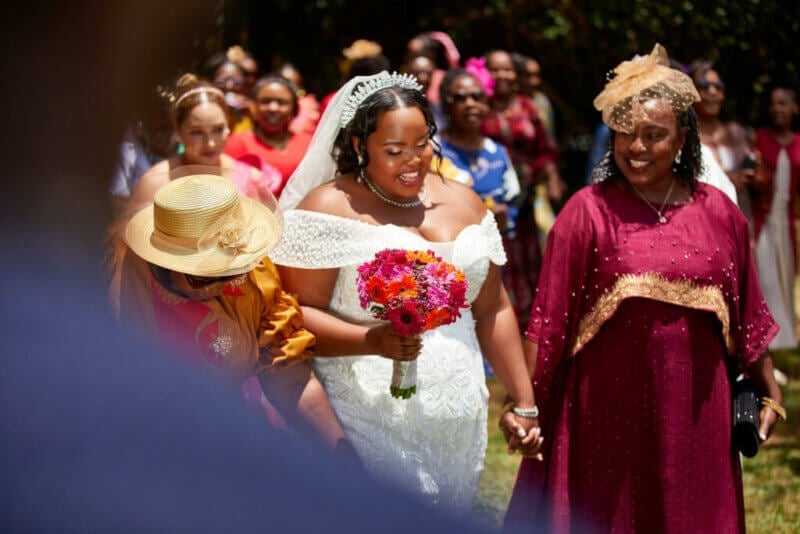
The length of a wedding ceremony in South Africa can vary quite a bit, depending on the type of celebration. A traditional wedding ceremony usually lasts around 45 minutes, while religious ceremonies — such as Christian, Hindu, or Muslim weddings — can run for an hour or more, especially if rituals or readings are included. On the other hand, a civil or Home Affairs ceremony is typically short and to the point, often lasting just 10 to 15 minutes.
What is the order at a wedding ceremony?
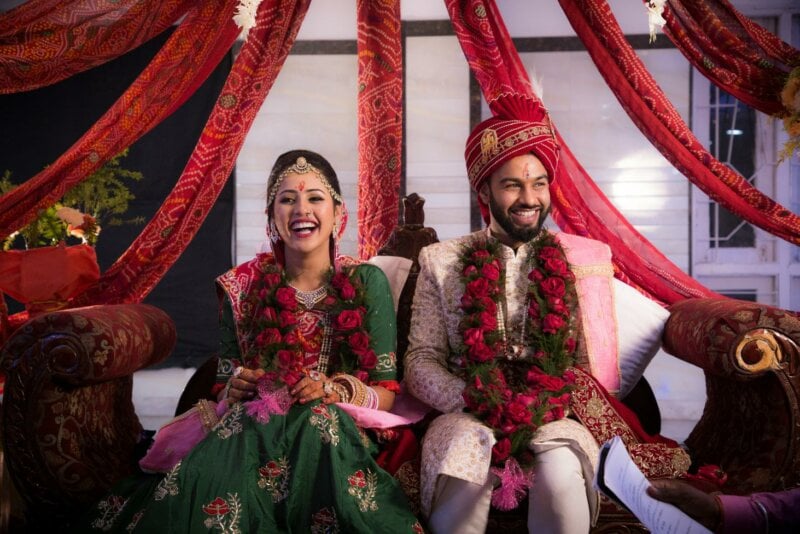
The order of a wedding ceremony refers to the sequence of events, from the moment it starts to the point where you’re officially declared a married couple. As mentioned earlier, the order of service can vary greatly depending on factors such as religious beliefs, cultural traditions, and personal preferences. Below, we’ll explore different wedding ceremony orders from a range of religions and cultures commonly found in South Africa.
What is a traditional wedding ceremony order?
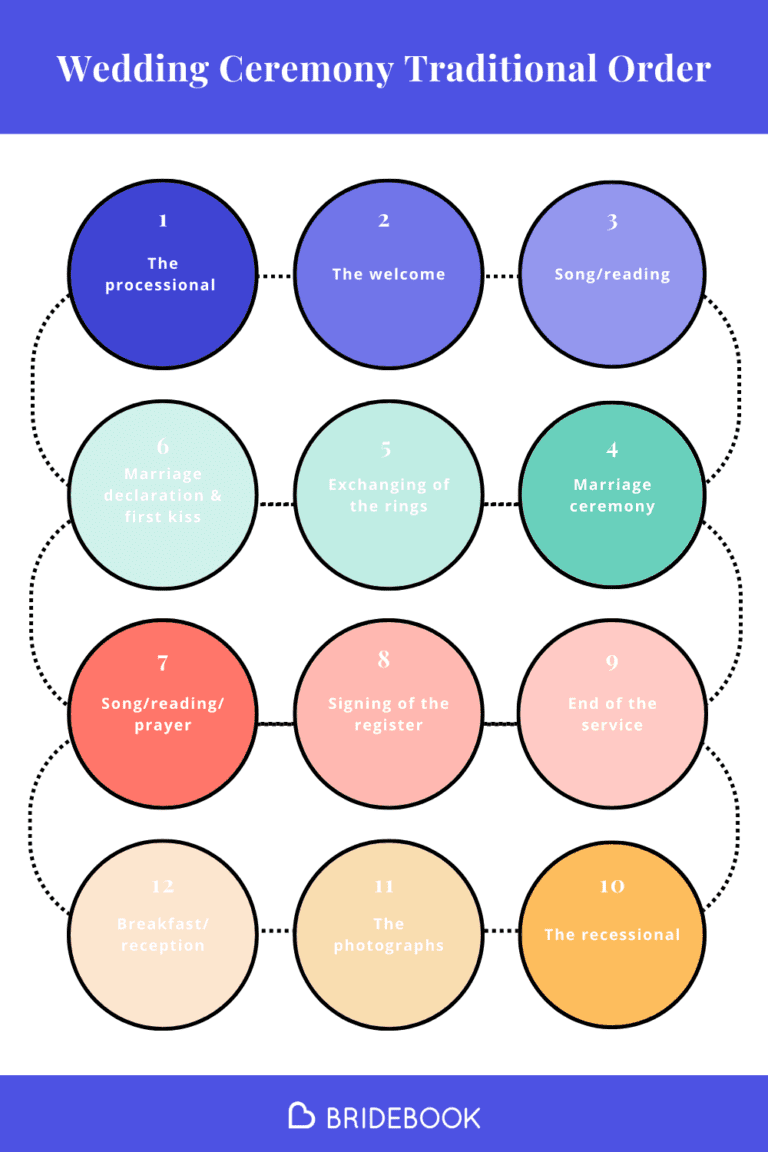
A traditional wedding ceremony remains one of the most popular ways for couples to tie the knot in South Africa. Depending on your preferences and what you include – like readings, songs, or cultural rituals – a traditional ceremony usually lasts between 45 and 60 minutes.
Here’s a typical order of events for a South African wedding ceremony:
A traditional wedding ceremony remains one of the most popular ways for couples to tie the knot in South Africa. Depending on your preferences and what you include – like readings, songs, or cultural rituals – a traditional ceremony usually lasts between 45 and 60 minutes.
Here’s a typical order of events for a South African wedding ceremony:
1. The processional
This is the moment when your excitement will be at its highest and your wedding ceremony begins. After your guests are seated and settled, the music you’ve chosen will play and the processional will start. The traditional order is:
Bride’s mumGroom’s parentsBride’s grandparentsGroom’s grandparentsGroomOfficiantBridesmaidsMaid of honourBest manRing bearer or page boyFlower girlThe bride and her father
Of course, this all depends on the size of your wedding and your own circumstances and preferences. This might be the traditional order, but even at a traditional wedding, you don’t need to stick to it. If you’re an LGBTQ+ couple, you may even choose to walk down the aisle together. Do whatever feels right and what makes the two of you happy on your big day.
2. The welcome
At the end of the procession, your family and friends will take their seats as you and your bridesmaids and groomsmen join you at the front (or altar if you’re having a religious wedding ceremony). The officiant will then welcome everyone and thank them for being there on your special day. If you’ve hired a celebrant, they’ll introduce you using stories and humour and add an extra level of personalisation that draws everyone in.
3. A song or reading
Before the marriage ceremony commences, you may have chosen to have a song or reading. These are very common at religious ceremonies, but they’re also lovely additions to non-religious or multi-faith weddings. You could include your favourite hymn, or ask a loved one to do a reading that means something to you, such as a poem, song lyrics or a short passage from a book or play.
4. Marriage ceremony
Next, the part you’ve been waiting for. The officiant will address you to speak about the commitment you’re making to each other and the importance of the vows you’re about to exchange. They’ll ask your guests whether anyone knows of any reason why you may not be married… and you’ll probably hold your breath, even though you know there’s nothing to worry about.
Then it’s time for the two of you to exchange vows. Many couples choose to repeat short lines spoken by the officiant, but you can also write your own vows. There’s no one right way to do it – go with what makes you both feel most comfortable and connected.
After the vows, you’ll say “I do” as you and your partner lock eyes. It’s often at this stage that your loved ones start tearing up with joy.
5. Exchanging of the rings
It’s time for the two of you to exchange rings (or another symbolic item if you’ve chosen alternatives). If you have a best man, they may have been holding on to them, ready to hand over to the officiant. You’ll then say a few words about how these rings symbolise your love, before placing them on each other’s fingers.
6. Declaration of marriage and first kiss
Next, the officiant will say the words you’ve been waiting for: “By the power vested in me, I now pronounce you husband and wife” – or a variation that suits your relationship and beliefs. They’ll then invite you to share your first kiss, and you’ll do so while your loved ones cheer and your photographer captures the magic.
7. An optional song, reading or prayer
In religious ceremonies, there may be another song, reading or prayer at this stage. Even if you’re not having a religious wedding, you might choose to include something meaningful here, and it’s a great opportunity to involve another loved one in the ceremony.
8. The signing of the register
For your marriage to be legal, you and your partner will need to sign the marriage register in front of two witnesses. This usually takes around 10 minutes. During this time, soft music will play as your guests relax and wait to celebrate with you.
9. The end of the ceremony
Once the register has been signed, the officiant will thank your guests for coming and let them know where to go next — whether that’s drinks on the lawn, a cocktail hour, or heading straight to the reception.
10. The recessional
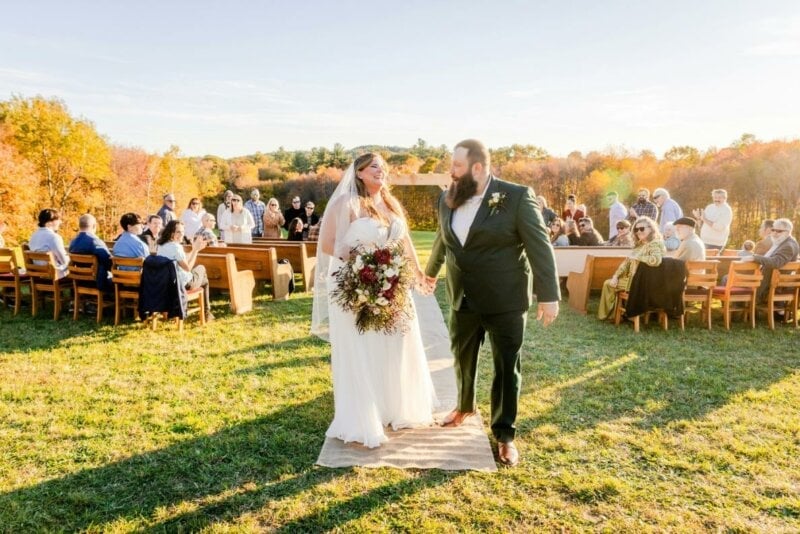
Music will play as the two of you walk out hand in hand, newly married. Your guests will usually line up just outside (with guidance from your photographer), ready to throw petals or confetti as you pass by and those beautiful just-married photos are snapped.
11. The photographs
Before you head to the reception, your photographer will organise a set of group photos with family and friends, along with a series of portraits with just the two of you. These are usually taken around the ceremony venue, or somewhere nearby if you’ve planned a special location. South Africa’s landscapes make for incredible photo backdrops — from vineyards to beaches to bushveld.
12. On to the breakfast or reception
After the photos are done, you’ll make your way to your wedding celebration — whether that’s a relaxed afternoon lunch, a sit-down dinner, or a full-on evening reception. It’s your time to eat, dance, toast, and enjoy every second with the people you love.
What is a registry office wedding ceremony order?
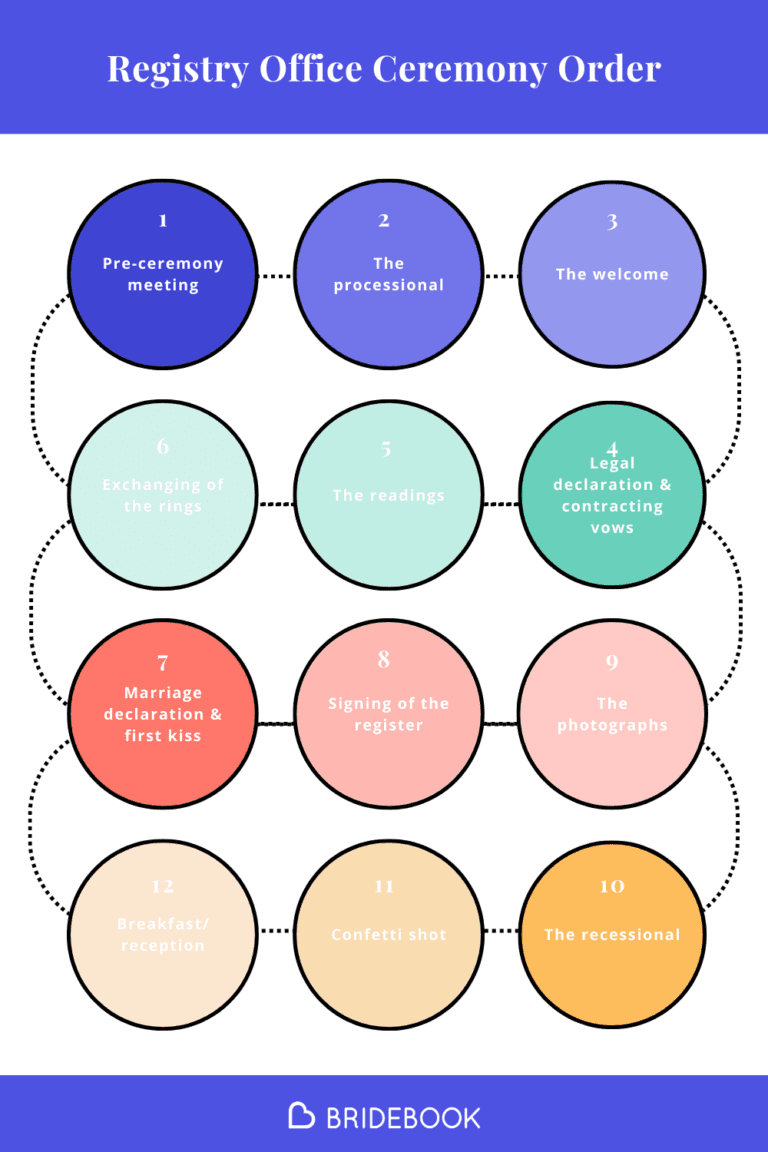
1. Pre-ceremony meeting
Before the ceremony begins, you’ll have a short meeting with the marriage officer or Home Affairs official (either together or separately) to confirm your personal details and ensure all legal paperwork is in order. Once everything is verified, the ceremony can begin.
2. The processional
Registry office weddings are usually smaller and more intimate, so the processional is short and simple. You can still include bridesmaids, groomsmen, a flower girl or page boy if you wish.
You’re also welcome to choose entrance music, but it must be non-religious to comply with the legal requirements of a civil ceremony.
3. The welcome
Once you’re at the front and your guests are seated, the marriage officer will welcome everyone and briefly explain the purpose of the ceremony.
4. The legal declaration and contracting vows
This is the most important part of the ceremony from a legal perspective. The marriage officer will guide you through the declaration and vows you are required to say to make your marriage valid. You may be able to choose from a few different approved versions.
5. The readings
If you’d like to include a reading, such as a poem, a quote, or lyrics from a song, now’s the time. Keep in mind that, just like the music, readings must not contain any religious references.
6. The exchanging of the rings
You’ll now exchange rings, or another symbolic item if you prefer. You can say short vows while doing so, either ones you’ve written yourselves or ones fed to you by the marriage officer — as long as they’re non-religious.
7. The declaration of marriage and first kiss
Now comes the big moment. The marriage officer will officially pronounce you married, and invite you to seal the ceremony with your first kiss as a married couple.
8. The signing of the register
To legally finalise the marriage, you’ll sign the marriage register along with two witnesses. This usually takes just a few minutes. You can play soft, non-religious background music while your guests relax and wait.
9. The photographs
Once the paperwork is done, you can take a few photos with your marriage certificate. These can be snapped by a professional photographer if you’ve hired one, or by your guests with their phones or cameras.
10. The recessional
The marriage officer will close the ceremony and invite your guests to join you at your next stop — whether that’s a celebratory lunch, a picnic, or a more formal reception. You can choose a meaningful (non-religious) song to play as you walk out together.
11. More photographs and the confetti shot
If you’ve hired a photographer, they’ll help coordinate some post-ceremony photos with your family and friends. Many couples also plan a fun confetti toss as they leave the venue. Just check with the venue in advance, as some registry offices may have restrictions. Flower petals or biodegradable confetti are popular, eco-friendly options.
12. On to the breakfast or reception
After the ceremony and photos, it’s time to celebrate however you’ve planned — whether that’s a relaxed brunch, a garden gathering, or a full-on reception. Even with a simpler ceremony, your wedding day can be filled with warmth, joy, and beautiful memories.
What is a Catholic wedding ceremony order?
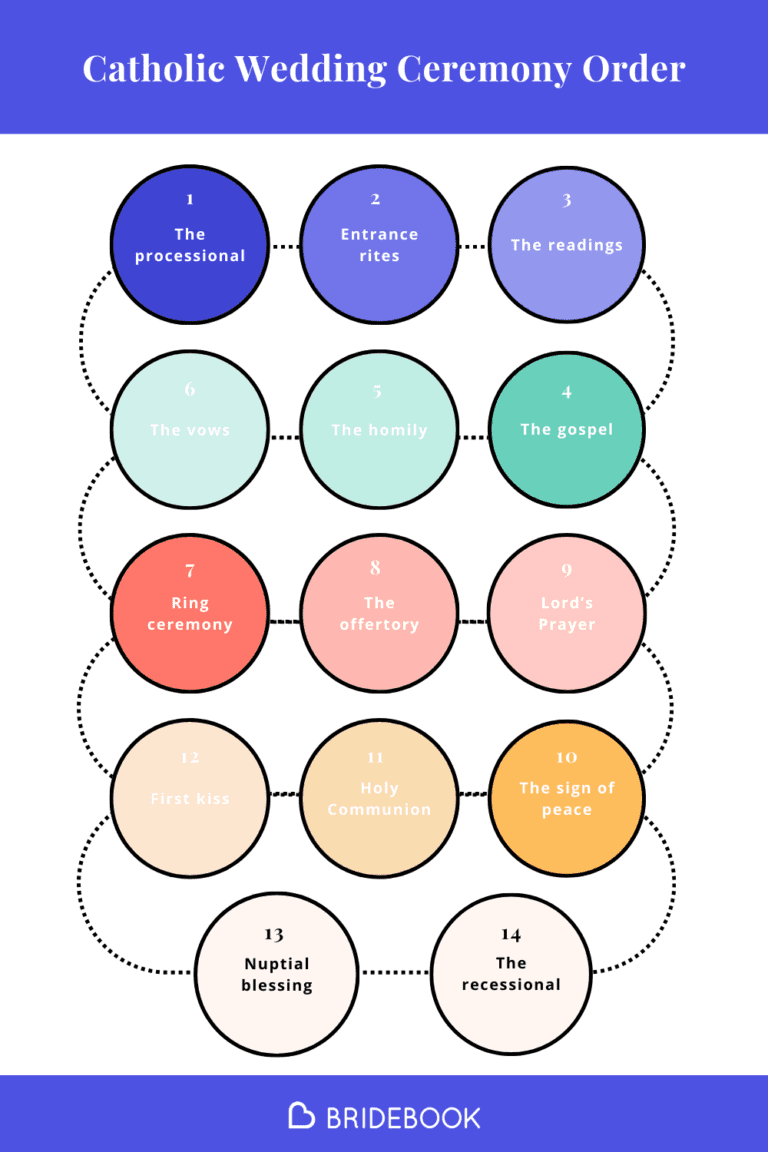
A Catholic wedding ceremony is deeply rooted in religious tradition, as the Church views marriage as not only a commitment between two people but also a sacred promise to God. For this reason, all Catholic wedding ceremonies are held in a church.
While the structure is similar to a traditional wedding ceremony, there are some key differences. Below is an example of the typical order of a Catholic wedding ceremony, which generally allows for fewer personalisations compared to non-religious ceremonies.
1. The processional
The processional begins with the priest walking down the aisle to the altar, followed by the wedding party in a traditional order:
Bride’s mumGroom’s parentsBride’s grandparentsGroom’s grandparentsGroomOfficiantBridesmaidsMaid of honourBest manRing bearer or page boyFlower girlThe bride and her father
This order can be adapted based on your preferences and family structure, but it’s a familiar and much-loved format for Catholic weddings in South Africa.
2. The entrance rites
The priest will welcome your guests and begin the ceremony with a prayer and the entrance rites. At least one partner must be Catholic for the ceremony to take place inside the church, and guests are encouraged to participate in the prayers and responses. While not every Catholic wedding includes a full Mass, it’s common — especially when both families are Catholic.
3. The readings
Before the ceremony, you’ll choose a few guests to deliver scripture readings — usually one from the Old Testament and another from the New Testament. One reading will typically focus on the meaning of marriage, and the congregation will respond with the Responsorial Psalm.
4. The gospel
The congregation will stand as the priest reads a passage from one of the Gospels — Matthew, Mark, Luke, or John. The chosen passage is usually tied to the themes of love, commitment, or faith.
5. The homily
The priest then gives a homily — a short sermon that reflects on the Gospel and explains its connection to marriage. This is often where the priest will share some personal words of encouragement or wisdom for the couple.
6. The vows
You’ll now exchange your vows — formally known as the Rite of Marriage. These are set, traditional vows required by the Church, so they can’t be personalised. However, the priest may recite them line by line for you to repeat, or you can simply respond with “I do.”
7. The ring ceremony
The best man (or whoever is holding the rings) will present them to the priest, who blesses them with holy water and prayer. You’ll then place the rings on each other’s fingers while repeating a short set of words guided by the priest.
8. The offertory
Several guests chosen beforehand will present symbolic gifts at the altar, such as bread and wine. Meanwhile, other guests may be invited to make a monetary offering. The priest will then bless the bread and wine during the Liturgy of the Eucharist.
9. The Lord’s Prayer
Together with your guests, you’ll recite the Lord’s Prayer as part of the ceremony.
10. The sign of peace
The priest will invite everyone to offer each other a sign of peace — usually a handshake or brief greeting — to symbolise love and unity within the congregation.
11. Holy Communion
Like at Sunday Mass, the congregation is invited to receive Holy Communion — bread and wine representing the body and blood of Christ. This act symbolises the couple’s union under God’s covenant.
12. The first kiss
The priest will now invite you to share your first kiss as a married couple. If the bride is wearing a veil, the groom will lift it first before the kiss.
13. The nuptial blessing
To close the ceremony, the priest will offer a nuptial blessing over the couple and all the guests. The blessing ends with the words “Go in peace,” to which the congregation responds, “Thanks be to God.”
14. The recessional
The wedding party exits the church in reverse order, followed by the newlyweds. Guests may gather outside for the classic confetti toss and photographs before everyone makes their way to the reception venue to celebrate with a wedding breakfast, lunch, or dinner.
What is a Jewish wedding ceremony order?
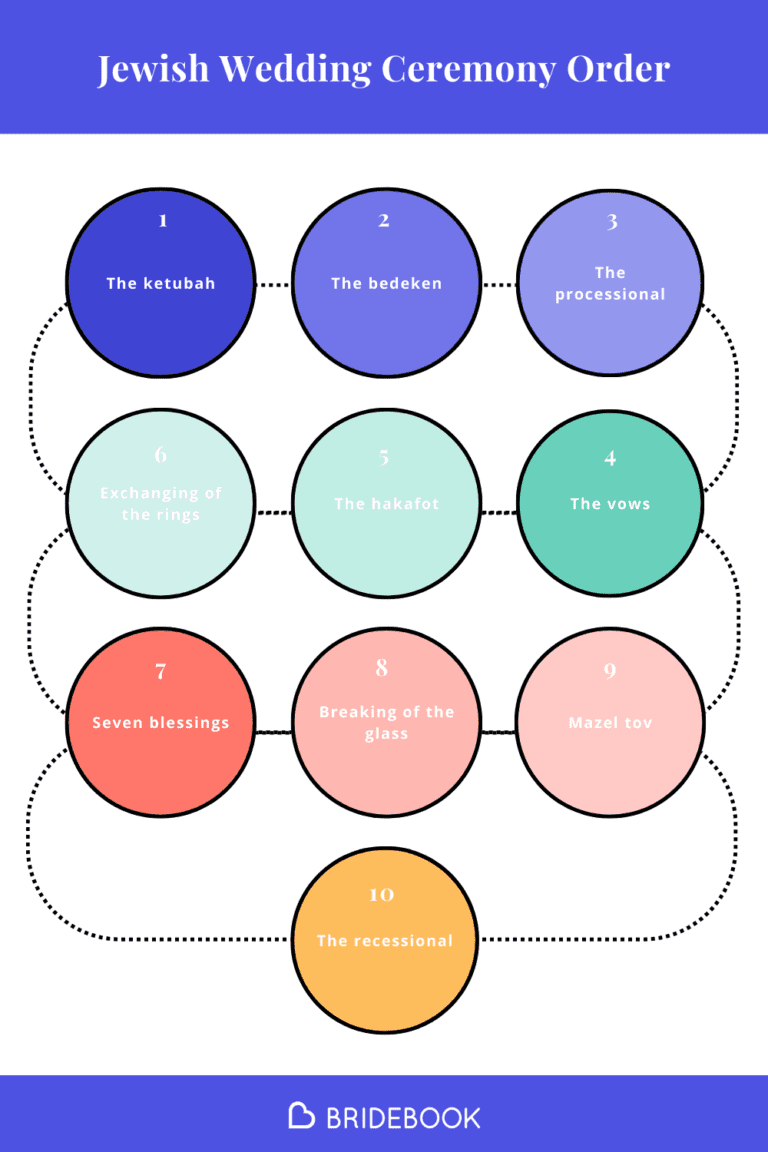
A Jewish wedding ceremony typically takes place in a synagogue, the traditional place of worship in the Jewish faith. During the ceremony, the bride’s family traditionally sits on the right-hand side, while the groom’s family sits on the left. The structure of a Jewish wedding ceremony generally follows this order:
1. The ketubah
Before the ceremony begins, the two of you will sign the ketubah — the Jewish marriage contract. It outlines the groom’s responsibilities to the bride and is a legally and spiritually binding part of the wedding. This is usually done in a separate room with close family and witnesses before the public ceremony begins.
2. The bedeken
The bedeken is a traditional ritual where the groom veils the bride before the ceremony. This act allows him to see her face and confirm her identity, symbolising modesty and love, and traces back to the biblical story of Jacob and Leah.
3. The processional
The rabbi begins the ceremony by walking down the aisle, followed by the rest of the wedding party in the following order:
Bride’s grandparentsGroom’s grandparentsGroomsmenBest manThe groom and both parentsBridesmaidsMaid of honourRing bearerFlower girlThe bride and both parents
In traditional Jewish weddings, both the bride and groom are escorted down the aisle by both parents, highlighting the equal importance of family and tradition.
4. The vows
Under the chuppah — a wedding canopy supported by four poles, symbolising the new home you’re building together — you will stand side by side. This is where you’ll recite your vows. In some Jewish traditions, the vows may be minimal or silent, with the ring exchange serving as the official commitment.
5. The hakafot
Traditionally, the bride circles the groom seven times under the chuppah, symbolising spiritual protection and the creation of a sacred space. In many modern South African Jewish weddings, couples opt to circle each other — often three times each and once together — representing mutual respect and balance.
6. The exchanging of the rings
After the ketubah is read aloud, the groom places a plain gold band on the bride’s right index finger while reciting a short Hebrew phrase declaring the marriage. In modern ceremonies, the bride often presents the groom with a ring as well. The accompanying prayer may be recited in Hebrew, English, or another language depending on your family’s tradition.
7. The seven blessings
Known as the Sheva Brachot, the seven blessings are central to the ceremony. They may be chanted or read by the rabbi or honoured guests. These blessings focus on joy, love, companionship, and community. As they are recited, a ceremonial cup of wine is usually shared by the couple.
8. The breaking of the glass
At the close of the ceremony, the groom (and sometimes the bride too) breaks a glass underfoot, wrapped in a cloth. This moment symbolises the fragility of relationships and serves as a reminder of the destruction of the Temple in Jerusalem. It’s also the cue for celebration.
9. Mazel tov
Immediately after the glass is broken, everyone shouts “Mazel tov!” — a joyful expression meaning “Congratulations” or “Good luck!” It’s one of the most recognisable and celebrated parts of any Jewish wedding.
10. The recessional
The newly married couple leaves the chuppah together, followed by the wedding party and family in this order:
The coupleBride’s parentsGroom’s parentsBride’s grandparentsGroom’s grandparentsFlower girlRing bearerBest manMaid of honourBridesmaidsGroomsmenRabbi
Guests usually follow outside for photos, the confetti shot, and on to the next venue for the celebration, whether it’s a seated reception or a traditional hora dance and feast.
What is a Muslim wedding ceremony order?
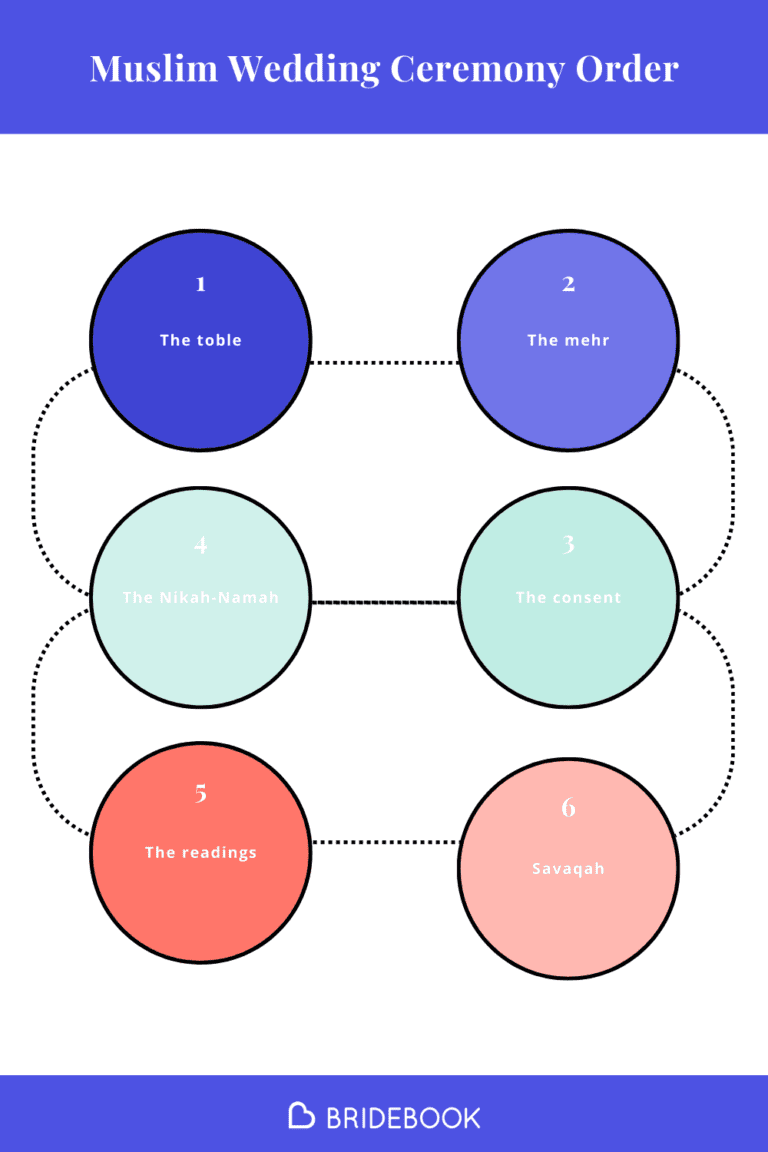
A Muslim wedding ceremony, also known as a Nikah, usually takes place in a mosque, a Muslim place of worship. Guests are asked to remove their shoes before entering the mosque, and men and women often sit separately during the ceremony. The mosque prayer leader, known as an Imam, will usually be the officiant.
The ceremony itself is usually fairly short, and will be completed within around 30 minutes. It will usually follow an order similar to the below:
1. The toble
Before the ceremony begins, the groom meets with the bride’s family to formally ask for her hand in marriage — a tradition known as the toble. Once the family gives their blessing, a prayer known as Surah Fatiha is recited by those present. This moment sets the spiritual tone for the marriage ahead.
2. The mehr
The mehr is a symbolic gift given by the groom to the bride as part of the marriage agreement. It can be money, jewellery, property, or another meaningful gift. In some cases, the engagement ring is considered part of the mehr. This act is not only cultural but also a legal obligation under Islamic law, representing the groom’s commitment and respect.
3. The consent
In a key part of the ceremony, the bride and groom must separately give their consent to the marriage without seeing each other. Each must say “qubool hai” — meaning “I accept” — three times in response to the officiant’s question. This triple declaration confirms mutual agreement and makes the marriage valid in Islamic law.
4. The Nikah-Namah
Next comes the signing of the Nikah-Namah — the Islamic marriage contract. Before signing, the officiant reads the contract aloud in Arabic for all to hear. This contract outlines the rights and responsibilities of both partners and is often signed in the presence of two male witnesses from each family.
5. The readings
Following the contract, the officiant delivers a short sermon and reads selected verses from the Quran. These readings focus on love, respect, and the importance of marriage in Islam. With this recitation, the couple is officially considered husband and wife.
6. Savaqah
The final ceremonial act is called Savaqah, a joyful tradition where money is lightly tossed over the bride as a gesture of good fortune. It also symbolises generosity and the sharing of blessings, with some couples choosing to donate this money to charity or distribute it to those in need.
After the Nikah ceremony, the celebrations continue with a reception, often held at a separate venue like a hotel or event hall. The festivities begin with the zaffe — a celebratory entrance where the bride’s father walks her to the groom, accompanied by joyful music and sometimes drumming. The reception may include speeches, dancing, food, and cultural rituals that vary by family heritage or regional background.
What is a Hindu wedding ceremony order?
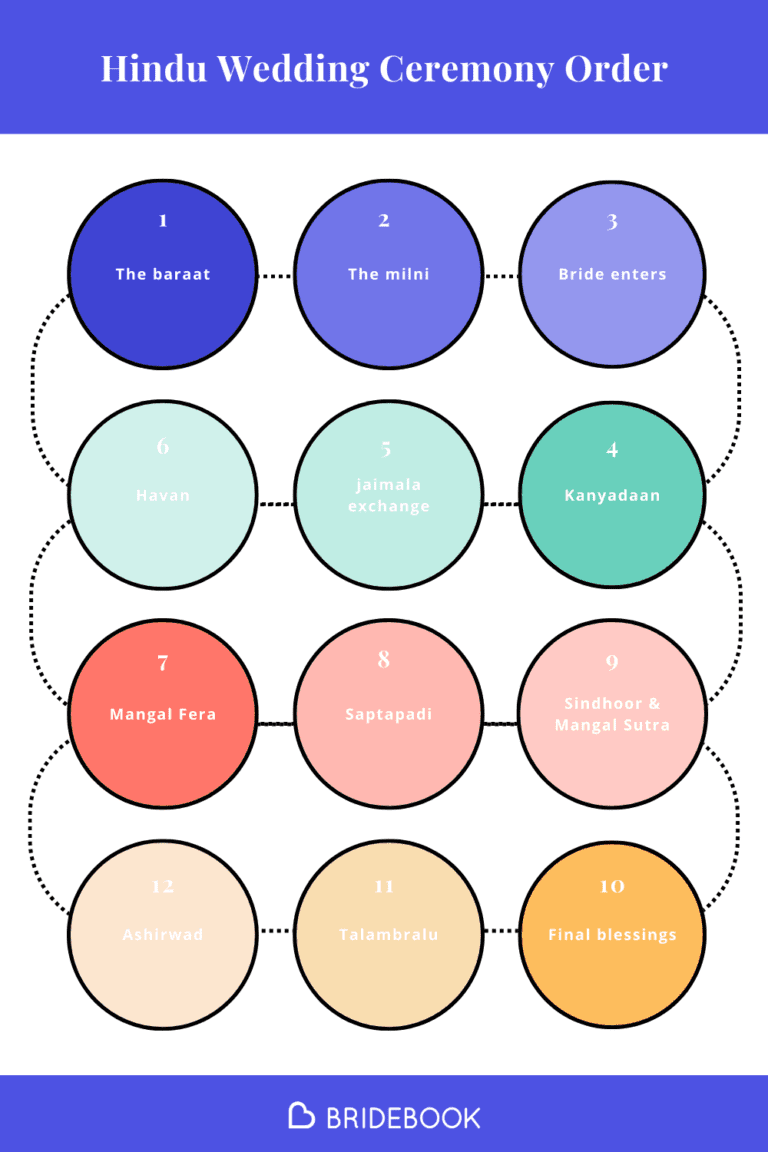
Hindu wedding ceremonies are some of the most vibrant, meaningful, and joy-filled events in South Africa — often stretching across several days and filled with rituals that bring families and communities together. While the religious ceremony itself is not legally binding under South African law, most couples also hold a civil ceremony either before or after their traditional wedding to register their marriage officially. The Hindu ceremony is typically conducted by a Brahmin priest and follows centuries-old customs, often with a few personal or regional twists depending on the family’s heritage.
In the lead-up to the wedding day, the bride’s family usually hosts a Mehndi ceremony, where the bride’s hands and feet are adorned with intricate henna patterns. This is followed by the Haldi ceremony, where older female relatives apply a turmeric paste to the bride and groom as a symbolic blessing and purification ritual.
The wedding ceremony itself usually lasts around 90 minutes and follows a sequence like this:
1. The baraat
The groom’s arrival is known as the baraat. Traditionally, he arrives on a white horse, surrounded by music, dancing, and celebration. In many modern South African Hindu weddings, the groom may opt to arrive in a decorated car, such as a luxury vehicle or convertible. The baraat sets the festive tone for the rest of the ceremony.
2. The milni
The milni is a welcoming ritual where the bride’s family greets the groom and his party. The bride’s father or elder male relatives meet the groom with a garland and may offer a symbolic gift known as shagun — a gesture of good luck and honour.
3. The bride enters
Escorted by her male relatives — often brothers or uncles — the bride walks down the aisle to join the groom. In modern ceremonies, many brides choose to walk with both parents or just their father. She takes her place at the front, alongside the groom, their parents, and the priest.
4. Kanyadaan
One of the most sacred moments in a Hindu wedding, the kanyadaan is the giving away of the bride. The bride’s father places her right hand into the groom’s right hand while asking him to honour and care for her as an equal partner. This act symbolises trust, responsibility, and the formal handover of the bride’s wellbeing.
5. The jaimala exchange
The couple exchange garlands, or jaimala, made of fresh flowers. This act represents mutual acceptance and respect. The priest then recites a prayer in Sanskrit to bless the union.
6. Havan
A small sacred fire is lit in the centre of the mandap to invoke Agni, the fire deity. The flames are a witness to the vows being made. The bride offers homam — typically grains, ghee, or flowers — into the fire, symbolising her devotion and intention to nurture the marriage.
7. Mangal Fera
The couple walk around the fire in four circles, called feras. The groom leads the first three laps, and the bride leads the last one. Each round represents a goal of life:
Dharma – moral dutyArtha – prosperityKama – love and desireMoksha – spiritual liberation
After the final round, there’s often a playful tradition where the couple races to sit down first — whoever wins is said to lead the household!
8. Saptapadi
This ritual involves taking seven symbolic steps together around the fire. With each step, the couple makes a vow, promising to support and care for one another in all aspects of life. Once all seven steps are completed, the marriage is considered spiritually complete.
9. Sindhoor and Mangal Sutra
The groom applies sindhoor, a red or orange powder, to the parting in the bride’s hair. He then ties the mangal sutra — a sacred gold necklace — around her neck. These symbols mark the bride as married and are worn with pride and reverence throughout her married life.
10. The final blessings
To close the ceremony, the priest recites prayers and blessings. Female elders, especially married women, offer whispered blessings and advice to the bride, often spoken softly into her right ear. Guests begin to offer congratulations and blessings for the couple’s future.
11. Talambralu
In this joyful ritual, the bride and groom shower each other with a mixture of rice, turmeric, and saffron. This represents abundance, prosperity, and the playful beginning of a happy life together. It’s often one of the most cheerful and light-hearted parts of the ceremony.
12. Ashirwad
As a final gesture of gratitude and humility, the couple bow their heads before their guests to receive blessings and well-wishes. Guests respond by throwing rice or petals over the couple, symbolising joy and prosperity.
Following the ceremony, it’s common to have several days of celebration — with food, dance, music, games, and other traditional rituals. South African Hindu weddings often blend North and South Indian customs, with unique regional twists that make each celebration deeply personal and beautifully vibrant.
What is a non-denominational wedding ceremony order?
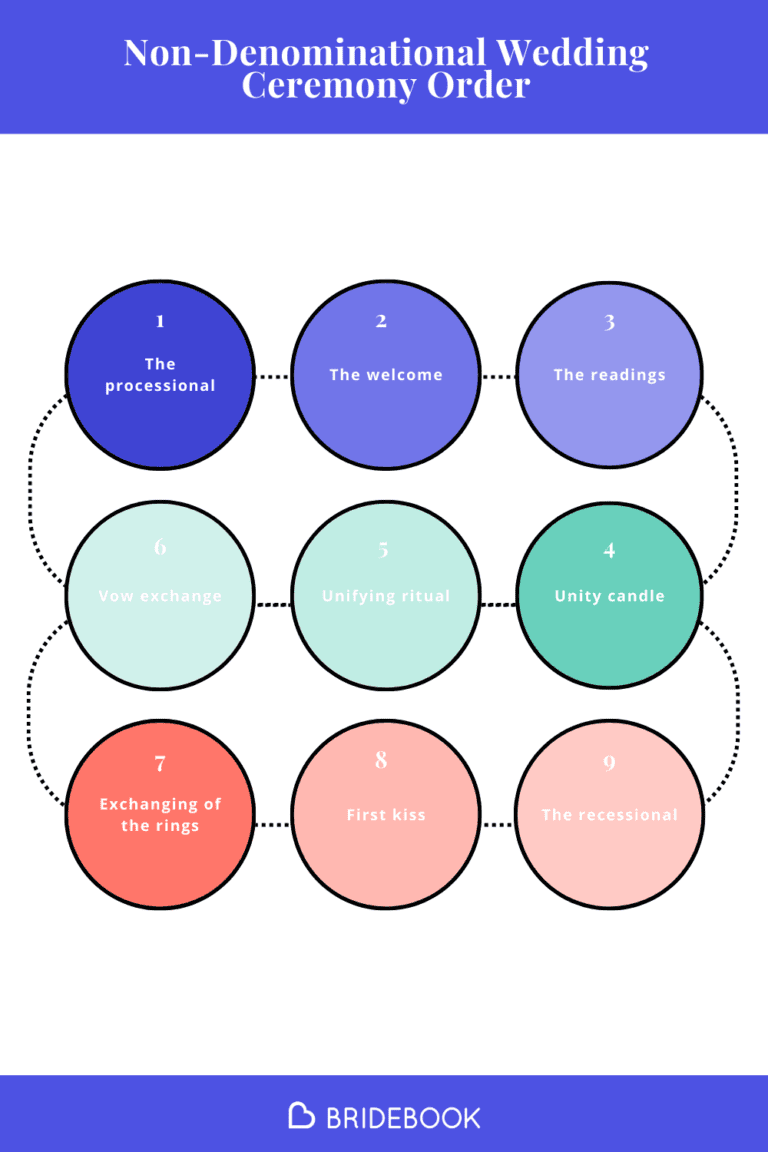
A South African non-denominational wedding ceremony is a flexible and inclusive way to celebrate love — one that’s not tied to a single religion, but still full of meaning, joy, and cultural beauty. It’s ideal for couples who come from different backgrounds, follow spiritual paths rather than formal religions, or simply want to honour their heritage in a personal, modern way.
Below is an example of how a non-denominational wedding ceremony in South Africa might flow, with optional rituals inspired by Zulu, Xhosa, Tswana, and Rastafarian traditions.
1. The processional
The wedding begins with the processional. The order can vary depending on your family structure or cultural preferences, but a common approach might include:
The officiant (can be a spiritual leader, elder, or someone ordained)The groom (may walk in with elders or family members)Best manGroomsmenBridesmaidsMaid of honourRing bearerFlower girl or traditional praise singer (imbongi)The bride, escorted by one or both parents or maternal/uncles or brothers
In Tswana and Zulu cultures, this can be accompanied by music — either drumming, ululations, traditional hymns, or even a brass band. Some couples incorporate a joyful dance or group singing as part of the bride or groom’s entrance.
2. The welcome
The officiant welcomes the guests and speaks about the couple’s journey, the meaning of marriage, and what it means to bring two families together. This may include a blessing or poem in a chosen language — isiZulu, isiXhosa, Setswana, English, or Afrikaans — depending on your background and guests.
3. The readings
A close friend or family member delivers a reading. This could be a favourite poem, an extract from a book, or lyrics from a meaningful song. It could also be a proverb — for example:
“Umuntu ngumuntu ngabantu” (A person is a person through other people)“Go tlogelwa ke lesego ke go itlhophela” (You let go of blessings when you act carelessly)
If the couple is spiritual, they might include verses from sacred texts, like the Bible, Quran, or Rastafari writings such as The Kebra Nagast or teachings from Haile Selassie.
4. The unity candle or symbolic act
To symbolise unity, the couple may light a candle together or choose a different act of joining. In South Africa, some couples pour water from two calabashes into one, braid traditional threads, or unite their families by sharing umqombothi (traditional beer) or herbal tea.
The officiant may speak briefly here about harmony, community, and the values that the couple wants to build their life around.
5. The unifying ritual
This is where you can include something deeply symbolic and personal. Some options inspired by South African cultures include:
Jumping the broom, a Pan-African and local tradition symbolising sweeping away the past and entering a new life
Handfasting, using beaded cords or traditional cloth (like shweshwe or kente) to bind the couple’s hands
Planting a tree or pouring soil from each family’s home into a shared pot
The tasting of four elements, where the couple samples bitter (aloe), sweet (honey), sour (lemon), and spicy (pepper) to represent the different seasons of love
Burning impepho (Zulu/Xhosa incense herb) to call on ancestral blessings
Rastafarian rituals, like burning frankincense or playing Nyabinghi drumming, may be included for spiritual grounding
This moment is often emotional and can be a highlight of the ceremony.
6. The exchanging of vows
The couple exchange vows — written personally, or repeated after the officiant. These can be heartfelt, funny, traditional, or simple and direct. You might say “I do” or create your own version, in your own language.
Some couples choose to exchange vows in more than one language — for example, English and isiXhosa — to honour both families.
7. The exchanging of rings
Now comes the exchange of rings or another symbolic item (such as woven bracelets, beaded necklaces, or meaningful stones). As the couple places the rings, they may say words that reflect their promises, spoken or repeated after the officiant.
8. The declaration of marriage and first kiss
With joy and celebration, the officiant declares the couple married and invites them to share their first kiss as a married couple — to the sound of ululations, whistles, or joyful drumming from the crowd.
9. The recessional
The couple walk down the aisle hand-in-hand, followed by their wedding party. Outside, they may be greeted by family tossing flower petals, confetti, or maize as blessings for abundance and joy. In some traditions, families break into spontaneous dancing and singing — or a choreographed performance might follow.
After the ceremony, it’s time for photos, feasting, and festivities — whether that’s a traditional reception, an open-air celebration, or a blend of cultures that’s entirely your own.
Plan your perfect wedding with Bridebook
Now that you know the order of many common wedding ceremonies in South Africa, you can start planning your own big day. Sign up to Bridebook to discover all the tools, information and resources you need to make planning fun and simple.
You Might Also Like…
- How to Write Wedding Vows
- 22 Questions to Ask Your Wedding Venue
- How Much Does a Wedding Planner Cost?